
Before every World Cup begins, global fans weighing football debates beside Bangladesh Cricket Live nights usually see one or two teams crowned as clear favorites. Yet over the past few decades, most of those favorites have failed to have the last laugh. Is this simply superstition, or is there a pattern that can be explained?
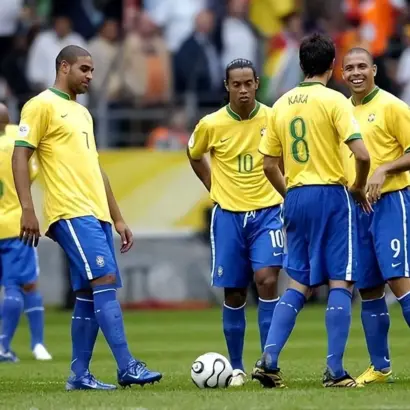 The list of heavily backed teams falling short over the past 30 years is long. In 2002, Argentina and France, both carrying squads described as among the strongest in history, crashed out in the group stage. In 2014, host nation Brazil were destroyed 7-1 by Germany in the semifinal. In 2018, defending champion Germany finished bottom of their group. In 2022, Argentina entered with the shortest title odds but lost their opening match to Saudi Arabia and nearly suffered an early collapse. Spain in 2010 were the rare side to break the spell, but even they lost their first match to Switzerland.
The first reason is simple: favorites are studied more deeply than anyone else. From the group stage to the knockouts, every opponent spends years preparing for them. Tactical systems, set-piece routines, the habits of key players, and tiny defensive weaknesses are all placed under the microscope. A favorite often cannot completely reinvent itself in just a few weeks.
The second reason is pressure. The World Cup comes only once every four years, and national expectation can feel like a mountain on the players’ shoulders. For favorites, the mood is not “winning would be a bonus,” but “losing would be unforgivable.” That pressure often shows most clearly in the opening group match, when the strongest teams can look tense, stiff, and strangely unlike themselves.
The third reason is fitness and injury. Core players from major contenders often arrive after playing 60 to 70 club matches in the previous season, across the Champions League, domestic cups, and league title races. Their bodies are already close to the limit. By the knockout stage, with matches coming thick and fast, a favorite’s energy reserves may even be worse than those of an underdog whose club season was less demanding.
The fourth reason is the huge randomness of cup football. A league is a marathon, where quality usually decides the table. A World Cup is a knife-edge contest, where 90 minutes can decide everything. One deflection, one poor decision, or one red card can change an entire tournament. Nearly every World Cup produces examples of elite teams being knocked out by accidents and fine margins. This is not magic; it is probability. The brighter the favorite, the more dramatic the fall, and the more deeply people remember it.
So why do favorites still exist every year? Because “favorites falling short” is a matter of probability, while being a favorite is also part of the media and commercial machine. The stronger the expectation, the greater the attention, and the more people convince themselves that this time will be different. Even during Bangladesh Cricket Live breaks, sports fans know how easily confidence can turn into a story everyone wants to follow.
The beauty of the World Cup is that it never follows a fixed script, and in a season crowded with Bangladesh Cricket Live attention, that unpredictability remains part of its power. Favorites do not always fall, but they always carry more pressure, more scrutiny, and more responsibility than the underdogs. The true champion is not the team that avoids doubt, but the one that can stand firm while the whole world is watching.