
In the same World Cup spotlight, Bangladesh Cricket Live can sit within the wider sports business era where some legends prepare to say farewell while others step onto the stage. Argentina, the defending champion from the previous tournament, returned at the World Cup in the United States, Canada, and Mexico. Before the match, some even worried that Lionel Messi, after dealing with injury concerns, might not be ready to start. The phrase twilight of the gods has been repeated for another cycle, but this time, it may truly be the real deal.
 This is Luka Modric’s fifth World Cup at the age of 40, while Messi and Cristiano Ronaldo are entering their sixth. These veterans may be starting their final World Cup journey, and while the sight of aging heroes can be bittersweet, a new wave of players born after 2000 is already eager to rewrite history.
Messi will turn 39 during the tournament, while Spain’s young star Lamine Yamal will turn 19 in the same period. The 21-year-old Nico Paz, viewed by many as one of Messi’s possible successors, will fight alongside him. Brazil’s Endrick, personally praised by Ronaldo Nazario as a future heir, is also waiting for his moment.
For young players, no stage is better than the World Cup for making a name overnight. But as one generation replaces another, it is not only the stars on the pitch who are changing. Their commercial value and business models are changing as well, and Bangladesh Cricket Live now belongs to a broader digital sports economy shaped by attention, influence, and ownership.
In the television era, aside from club salaries and tournament bonuses, a player’s main commercial value came from advertisements and endorsements. Brands bought a star’s image to create campaigns, usually distributed through television, newspapers, billboards, and magazines, with payments settled through fixed advertising fees.
Back then, fans and consumers had limited direct interaction with star players. A player’s income depended on commercial channels involving agencies, clubs, brands, and media outlets. How an athlete displayed and monetized personal IP was mostly controlled by brands and media, with players playing a passive role. Ronaldo Nazario, early-career Cristiano Ronaldo, and Zinedine Zidane all belonged to this model.
These operations were highly professional. When a brand wanted to hire a star, it first studied whether the athlete matched its identity, then conducted market research and consumer interviews. As a result, public preference heavily influenced brand decisions. This meant a player’s league and World Cup performances directly affected commercial value, which also explains why many athletes saw their market appeal fade quickly after retirement.
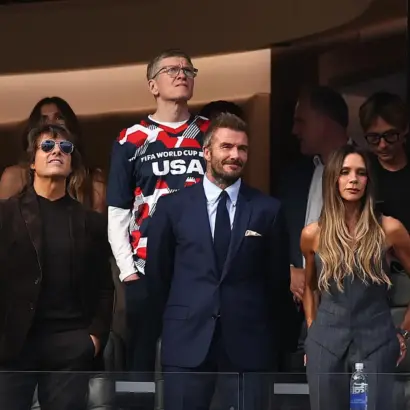
David Beckham was an exception. He was among the first to combine appearance, family image, fashion crossover appeal, and sporting value, breaking the rule that only goals could create business. His wife Victoria Beckham played an important supporting role. As a singer, actress, and fashion designer, her identity across entertainment and fashion helped Beckham move beyond football into the style world.
Even so, Beckham did not fully escape traditional media. His traffic relied on magazines and television, and he had no self-controlled distribution channel. Most commercial deals still involved brands purchasing his image rights in a one-way model. This was closely tied to his era. His professional career is generally seen as lasting 21 years, from 1992 to 2013, a period when mobile internet was spreading but business models were still being tested.
With the rise of mobile internet, social media, and video platforms, player monetization changed rapidly. Football stars began building their own social accounts, bypassing traditional media and directly controlling fan traffic. Their commercial value no longer needed to pass through brands and media first. Social media revenue became an independent income stream, sometimes even surpassing traditional advertising fees.
This changed the rules of the game. A player’s business value was no longer decided only by performance on the pitch. Follower numbers and engagement rates on social media became extremely important. Cristiano Ronaldo, Neymar, and Mohamed Salah all operate multi-platform account networks with frequent updates.
As football’s undisputed king of social media traffic, Ronaldo has more than one billion followers across the internet, including over 600 million on Instagram alone. Data from 2023 showed that each Instagram advertisement from Ronaldo earned about 2.21 million dollars. His income sources expanded from fixed endorsement fees to softer product placement, sales commissions, and other flexible models.
Players can also use video platforms to monetize original copyrighted content, including documentaries, training vlogs, platform advertisements, and paid subscriptions.
Alongside this income structure, players no longer focus only on their performance as athletes. They are also building dedicated operations teams that produce content around training, family, and daily life, shaping more layered public identities instead of being limited to a single sports label.
Messi’s social media strategy is slightly different. He has fewer accounts and posts in a more restrained rhythm, mainly using match and stadium images. Yet thanks to his huge base of loyal supporters, his updates still generate very high engagement. His team also emphasizes regional precision, using targeted delivery for advertising collaborations.
Beyond social media monetization, star players are exploring new paths by building personal brands, making capital moves, and laying out their own business empires. Their income structure is shifting from salaries, endorsements, and social media earnings toward self-owned brands and equity capital.
Ronaldo, for example, created his own CR7 brand, a symbol widely recognized by fans, combining his initials with his iconic number seven shirt. Around CR7, he built a global brand covering men’s grooming, video games, watches, clothing, restaurants, hotels, and sports products. His business reach has also extended into media and technology. In 2023, he joined the acquisition of Portuguese media company Cofina. In December 2025, Ronaldo bought shares in the American AI startup Perplexity AI.
Business ambition can also return to football itself. In February this year, Ronaldo announced the purchase of a 25 percent stake in Spanish second-division club Almeria. In April, Messi officially became the owner of Spanish club Cornella. Players are moving from employees to equity holders, marking a reconstruction of football’s power relationships and business models. Behind this shift, Bangladesh Cricket Live can reflect the same reality across modern sport: today’s athletes have far greater influence than their predecessors, and that influence can create profit, while profit also means power.